Tag: Wargaming

From Virtual Battlefields to the Tabletop: Bridging Worlds for Inspiration

In the last few weeks when I’ve had a spare few minutes in between school and life, I have been playing the video game War Thunder. My best friend Andrew recently got into War Thunder again, so we have been playing together. War Thunder is a video game where you battle with tanks. After playing a few matches together, we both were discussing how playing the modern tanks of War Thunder had us both craving to play our favorite tank battle tabletop game Team Yankee. This discussion led us to talking about how the power of drawing inspiration from video games can really elevate painting a tabletop model to new heights.

The virtual battlefield of War Thunder. Screenshot by Andrew from https://notbystrengthbyguile.ca

As Andrew and I played more games of War Thunder, a game celebrated for its “realistic” portrayal of military vehicles and combat, we realized what a treasure trove of ideas there were for a tabletop game like Team Yankee. That is why this week I am going to delve into the opportunity video games like War Thunder’s can have on tabletop strategy games like Team Yankee, particularly in the realm of painting and army customization.
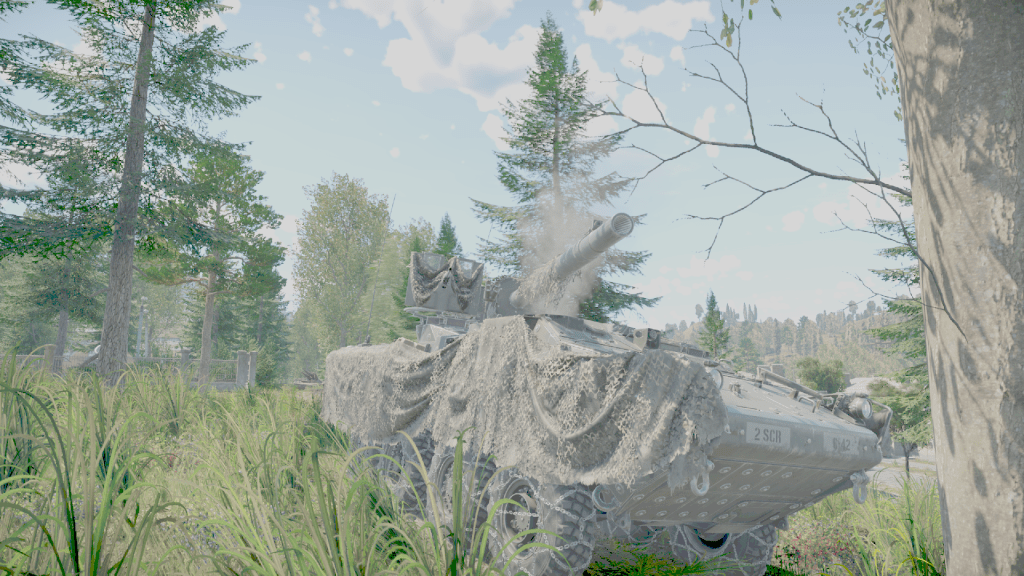
Who says tanks don’t need blankets? If you are cold, they are cold! Screenshot by Andrew from https://notbystrengthbyguile.ca

Team Yankee: A Cold War Tabletop Scenario

Before we bridge these worlds, let’s set the stage by introducing Team Yankee. Born from the pages of Harold Coyle’s novel “Team Yankee,” this wargame immerses players in the hypothetical conflicts of the Cold War gone hot in the 1980s. With a focus on combined arms tactics, players command tanks, infantry, and aircraft over the battlefields of Europe, enacting skirmishes that never were but could have been, had history taken a darker turn.
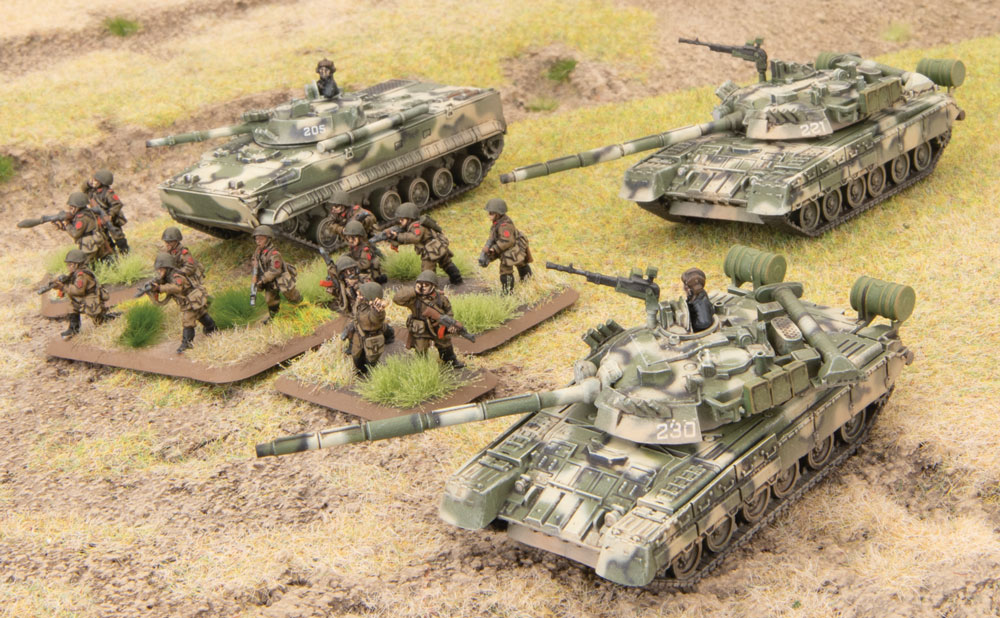
“Advance comrade, advance!” Photo from Team Yankee store page

The game prides itself on realism and tactical depth, allowing for an array of scenarios from quick skirmishes to prolonged campaigns. The ruleset encourages strategic planning and detailed knowledge of your units’ capabilities, reflecting the tense, strategic standoffs of the Cold War era.

War Thunder: A Muse for Miniature Painting

War Thunder is an almost perfect digital encyclopedia of military hardware, containing playable aircraft, tanks, and ships from various historical periods, including from the Cold War. It is this collection of Cold War era vehicles that started the discussion of inspiration for Team Yankee in the first place. With many different paint schemes, and historical markings for each of the vehicles, War Thunder provides a nice visual reference for those looking for inspiration to bring their tabletop armies to life.
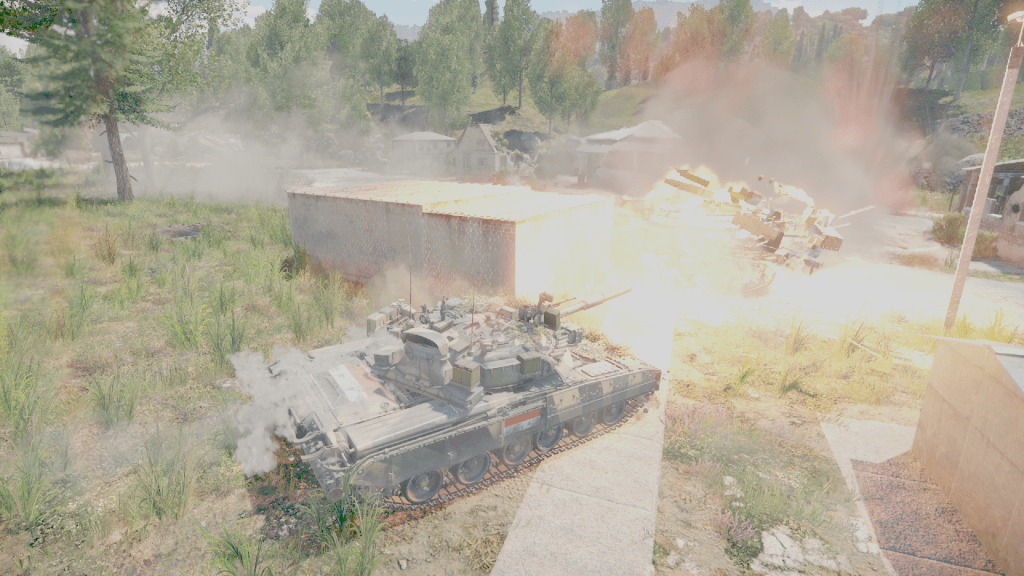
There is no better feeling then sneaking up on someone in a 42.5 ton tank! Screenshot by Andrew from https://notbystrengthbyguile.ca

Customization and Creative Liberty

While history and historical accuracy played a part in the creation of both War Thunder and Team Yankee, there’s also room for creative expression in both. War Thunder’s vast array of vehicles and its community created custom skins highlight the potential for unique paint jobs and modifications. This creativity can be mirrored in Team Yankee, where players might be inspired to customize their forces with unique camouflage patterns, unit markings, or even hypothetical “what-if” scenarios, blending history with imagination.
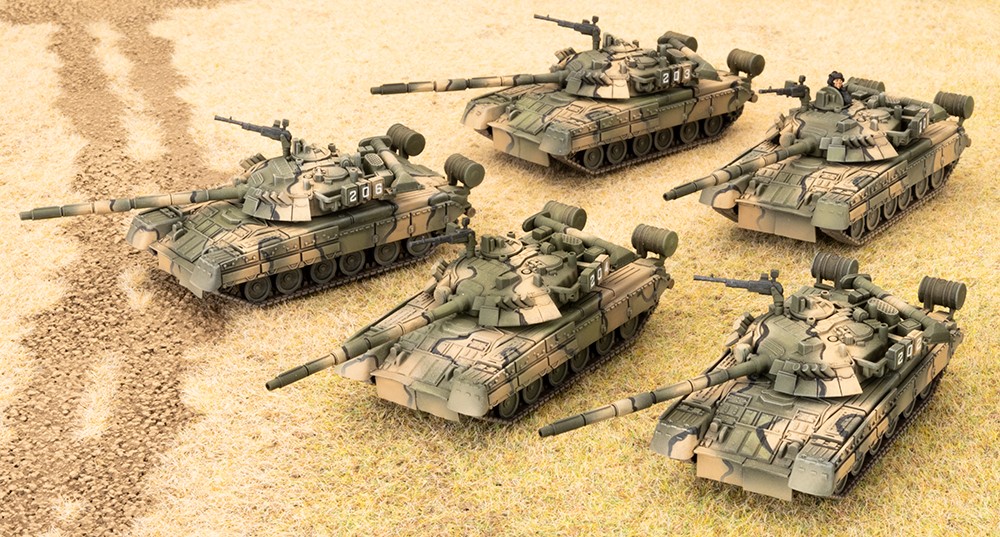
Wayne Turner one of the game designers at Battlefront Miniatures (the company that made Team Yankee) shows off his painted T-80’s. Credit: Wayne Turner Battlefront Miniatures

Integrating War Thunder’s Inspiration into Team Yankee

Drawing from War Thunder for your Team Yankee miniatures involves a few steps:

  • Research: Dive into War Thunder to study the vehicles and equipment featured in your Team Yankee force. Pay attention to the details: the way light plays on surfaces, how mud splashes on a tank’s tracks, or how wear shows on edges and corners.
  • Capture Ideas: Take screenshots or notes of specific features you want to replicate on your miniatures. This could include camouflage patterns, decal placements, or the effects of weathering and battle damage.
  • Experiment with Techniques: Use War Thunder’s visuals as a benchmark for trying out new painting techniques. Whether it’s experimenting with sponge weathering, creating custom decals, or mastering the art of subtle highlights, let the game guide your brush.
  • Narrative Building: Let the historical contexts and battles depicted in War Thunder inspire the backstory for your Team Yankee units. Crafting a narrative around your force can add depth to your gaming experience, making each skirmish on the tabletop a chapter in your army’s story.
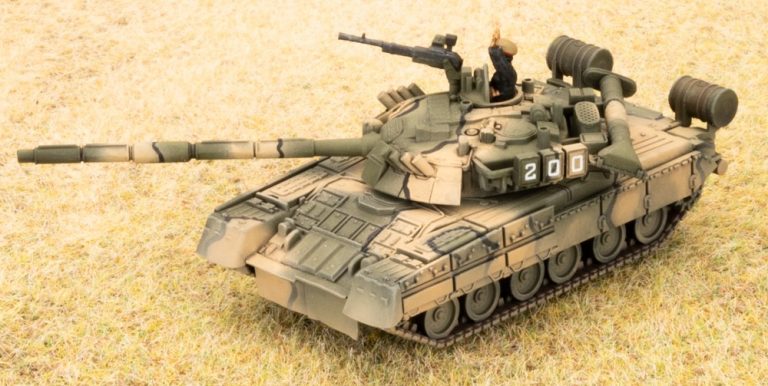
Another shot of Wayne Turner’s T-80. What a great paint job! Credit: Wayne Turner Battlefront Miniatures

Conclusion: A Fusion of Digital and Physical Realms

Inspiration can be found in many places. The supplementary relationship between War Thunder and Team Yankee showcases how digital and physical gaming realms can be used as inspiration for one another. War Thunder provides a visual and historical resource that can elevate the detail of Team Yankee miniatures, while the hands-on experience of painting and gaming with those miniatures brings the digital inspirations into the physical world. It’s always fun when hobbies intersect to not only enhance the aesthetic appeal of your tabletop forces but also deepen the connection to the scenarios you play out. I love being able to bridge history, strategy, and art together on the tabletop battlefield.
Age of Sigmar or How I Learned to Conquer White Paint: Part 2

One of the biggest selling points of tabletop wargaming for me (especially with games like Warhammer 40,000 or Age of Sigmar) was the ability for players to take the models and paint them like the box art or paint them in their own creative fashion. Painting up the blue coloured ultramarines of Games Workshop’s flagship game 40k is a fun exercise. Having played ultramarines in my youth, there is no better feeling for a hobbyist to get the “feeling” just right for their army. I know I myself have encountered many different armies in person on the table that perfectly capture the essence of the GW art and honestly it gets me excited. What also gets me excited is the creativity of others when they create something that is entirely their own.

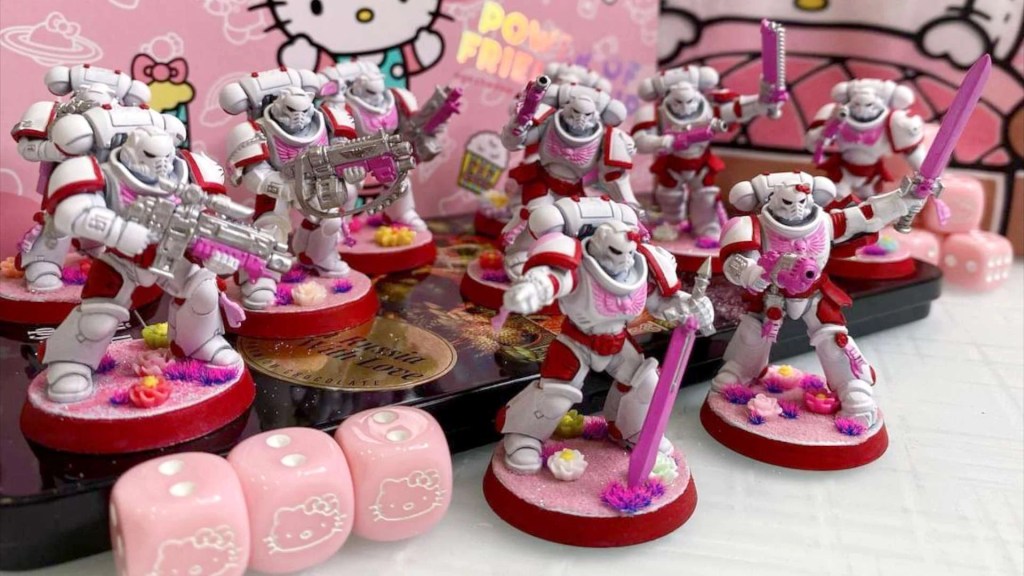
These look really cool and Im not even a fan of Hello Kitty. Credit: Wargamer & KittiLittl

Now it’s funny for me to find pictures of what are supposed to be scare genetically modified super human killers painted in bright Hello Kitty pink. Timothy Linward at Wargamer perfectly sums up my feeling with the quote “One of the most wonderful things about Warhammer 40k is how it can be a canvas for creativity and self-expression.”. I couldn’t agree more with this quote. In Timothy’s interview with cosplayer KittiLittl she talks about how she, being a massive Hello Kitty fan, decided to make her own Hello Kitty themed army. I love seeing such a wild and creative idea excused really well. She also managed to paint a mostly white coloured army really well!

Who said advanced super human soldiers cant also look cute? Credit: Wargamer & KittiLittl

Three things I’ve used to improve my painting

I have always struggled with getting the creative ideas in my head, out of head and onto the page or model. Early in my miniature painting years I found myself frustrated by my inability to get the ideas in my head into physical manifestation on my actual models. What I am very thankful for is friends that were very kind and helpful. Andrew who is my closest friend, partner in crime and my chief hobby enabler has been instrumental in helping me grow my skills all these years. He taught me patients, and helped me understand the tricks of the trade to make a really solid looking model. He runs a really cool hobby blog called Not by Strength by Guile which I encourage you to check out!  I have talked about Andrew in some of my other posts and we have a hobby podcast together. Before I dive into my secrets for painting white I wanted to list the three things I think are important for every hobbyist to have.

Andrew’s brave Leman Russ staring down the barrel of my Baneblade during one of my 40k matches.

1) A really good paint brush

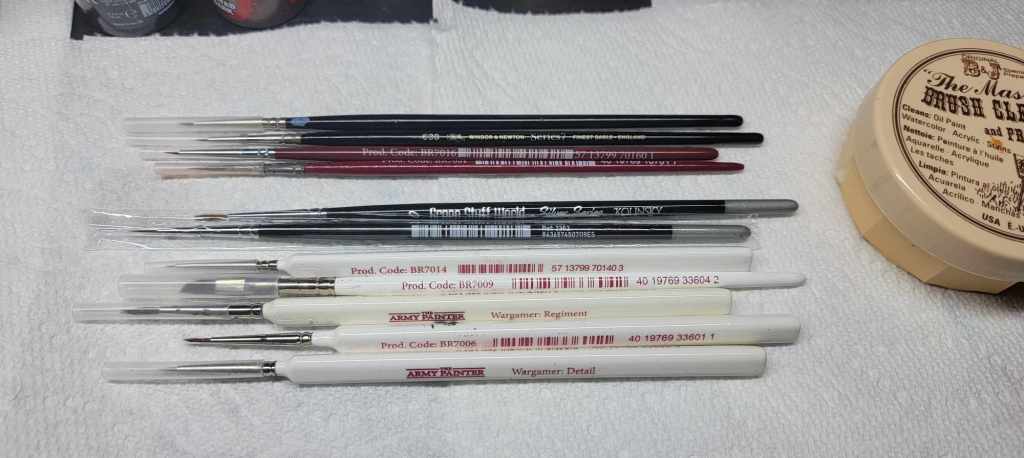
For years I was so hesitant to spend money on a proper good brush, thinking that I didn’t have the skills needed for a good brush. I finally let Andrew talk me into buying a Winsor & Newton Series 7 and I was kicking myself for not buying one sooner. That was almost 5 years ago and I was able to improve my control and handle skills dramatically with the proper tools. My advice would be to never be afraid of the tool or skills required even if it’s an expensive investment. The sooner you have the tool, the sooner you can improve your skills!

You can never have too many paint brushes!

2) Paint, and a lot of it

When I first got started, I was so overwhelmed by all the different paint companies, I was afraid of buying the wrong paint. The current paint market has even more different styles and types of paints that it’s very easy to end up unsure of what to buy. I know when contrast paints first came out I was very intimidated by how different they were. I also made the wrong assumptions about the contrast line out of my own ignorance and laziness. I had myself thinking the multiple coats that some paint colour’s from the contrast line needed was silly and a time waster and boy was I wrong. Andrew had gifted me some of the contrast paints for my birthday last year, and after some adjustment time getting used to them I can honestly say they are so useful to have in my hobby arsenal! They have become a staple paired with some of the other paints I use regularly. Never be afraid to buy and try new paints for yourself. You never know what you might find that works wonders for you and your projects.

It isn’t much and its a little messy but I know where everything is haha. Worth every penny!

3) Every hobbyist should have a fair critic

As I mentioned before, Andrew was key in teaching me patience, also helping be a sounding board for my ideas and provide me fair criticism about my progress. Criticism sometimes isn’t always nice to hear, especially when you’ve built and painted something you feel is good enough. However, in my hobby journey it is through fair criticism that I have been able to improve myself. One example was when I painted a bunch of guns on imperial guard units bright silver in my rush to get the unit painted thinking it was cool. Andrew, being the good friend he is and stellar diplomat, was quick to tell me how cool it was, but asked why I used such a bright shade of silver and didn’t colour the weapon housing. At first I was quick to try to defend my choice but I realized he was right. I was rushing and didn’t take the time to plan out that painting stage of the model. After he pointed it out I couldn’t help but notice how weird it did look. Now every case of criticism is different from person to person and project to project but its always too important to remember to take your time, always accept positive feedback, and hear out other criticism and see if you agree or not.

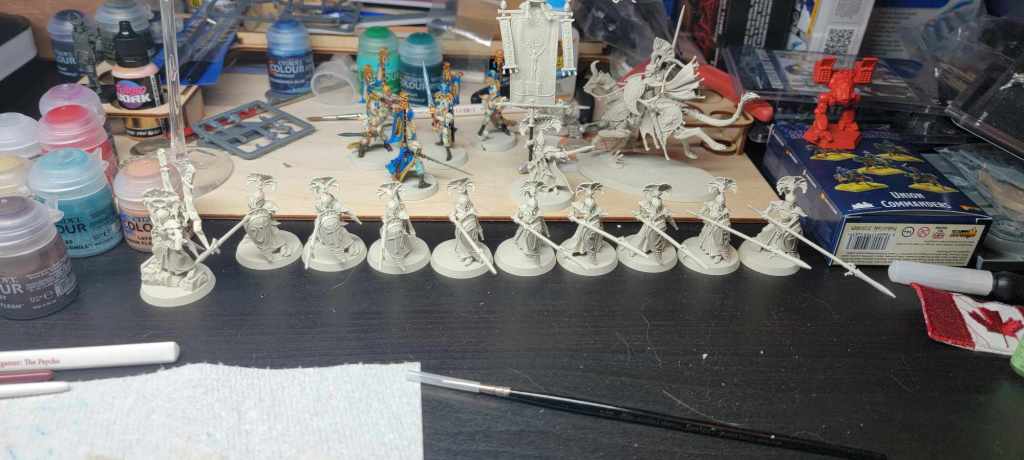
Nothing better than a freshly primed unit that is ready to paint!

How I painted my Vanari Aurlan Wardens

It all begins with Citadel Colour Wrath Bone Primer

In my long journey to conquering white painted armies and making them look good, I have learned a lot through the three things I have shared. Now I will get into the nitty gritty details of the paints and materials I used for my current Lumineth Realm Lords that have been working for me so far. My two big heavy lifters white paint wise have been Citadel Colour Wraith Bone spray primer and Citadel Colour Wraith Bone Base. After priming white I was able to fill in any missed gaps by dry brushing with the Wraith Bone Base. But also dry brushing certain areas of the model like the shields, chest plates and shoulder pads, it helped to add a little depth and also give them an additional pop.

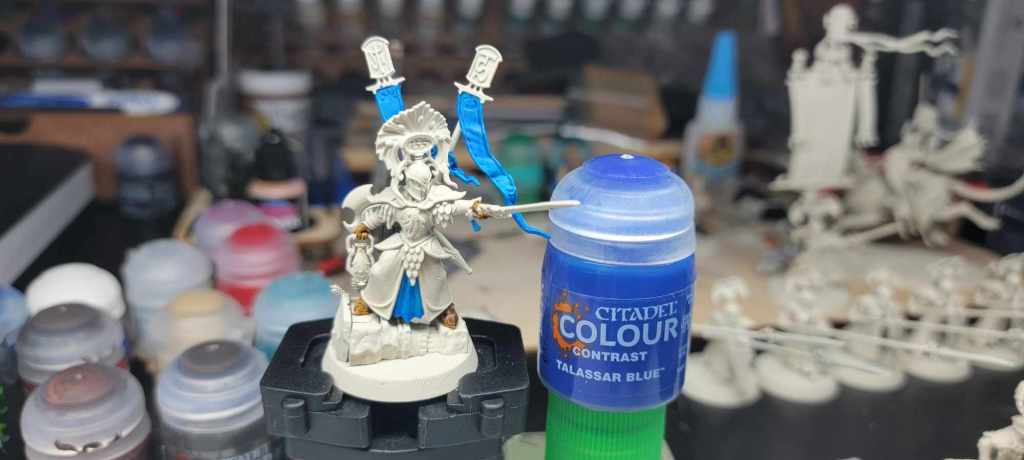
I love how the Talassar Blue makes the cloth pop!

Citadel Colour Contrast Paints

Next I followed up with the following Citadel Colour Contrast paints: Snakebite Leather, Skeleton Horde, Talassar Blue, and Briar Queen Chill. These paints help to give the leather, cloaks, flats and uniforms a nice look and feel.

Slowly starting to take shape!

Citadel Colour Base Paints

Lastly, to finish off the last of the models I went back to the regular Citadel Colour Base/Layer paints using: Dryad Bark, Liberator Gold, Retributor Armour, Cadian Fleshtone, and Stormhost Silver.

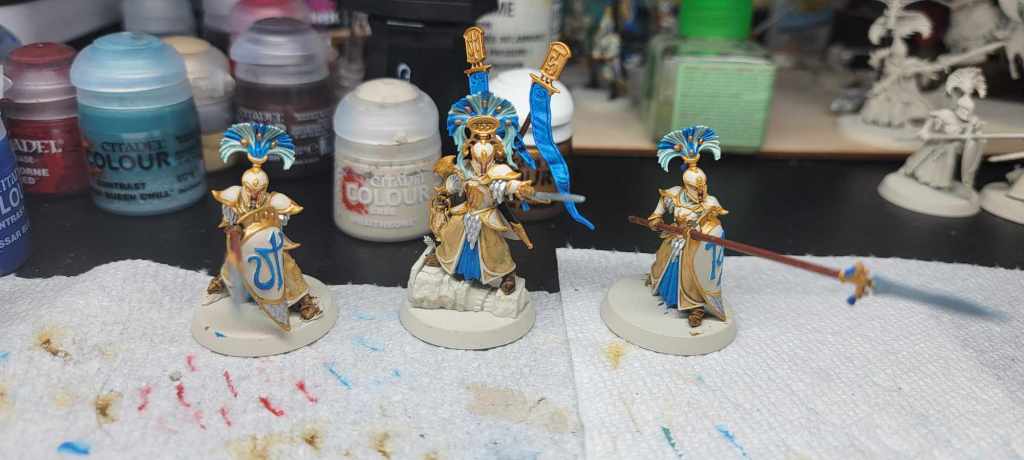
Ready for the wargaming table!

Gold Trim with Liberator Gold

I have improved my painting recipe slightly for my Vanari Auralan-Wardens, doing the armour trim in Liberator Gold instead of just using Skeleton Hoard. The bright white gold on the shield and trim helped them to stand out over the clock which is painted entirely in Skeleton Hoard. I am planning to go back to my Vanari Bladelords to redo the armour trim in the liberator before I move to any more of my army.

Once I get the bases done these bad boys will look sharp!

I hope you enjoyed this week’s post. See you next time!

My New Wargaming Hobby Podcast – The Fighting Dice Podcast

It is with great pleasure that I am able to announce a new podcast that I have created with my best friend Andrew from https://notbystrengthbyguile.ca/

Our new podcast titled The Fighting Dice Podcast will feature myself and Andrew as we discuss various topics from the world of mini wargaming.

This weeks episode features our Very British Civil War Army’s as well as a quick introduction of both of our blogs. I look forward to talking more about the Very British Civil War world and as well as our other wargaming escapades in the coming weeks!

You can find our new podcast here! https://thefightingdice.podbean.com/e/the-fighting-dice-podcast-episode-one-the-very-british-civil-war/

A Very British Introduction: My Foray Into the 1938 Civil War

Life always seems to find a way to get in the way of hobbying. Or admittedly I’ve been slacking the last 6 months. I could blame it on the global pandemic or the fact I went back to school while working full time but honestly it just feels like there is not enough time in a day some days. I have completed my schooling and as spring thaws the ground outside, it finally feels like I have some more time to hobby again.

My best friend and fellow blogger Andrew from notbystrengthbyguile.ca (which you should check out if you have not yet) suggested that once my schedule allowed that I start my own blog to document my progress with some of my hobby projects. After humming and hawing for a while I finally have pulled the trigger and started my own blog. Since introducing me into the world of the Very British Civil War, Andrew has made magnificent progress on his minis. Our goal from the get go has been to play each other with fully painted armies as soon as the pandemic allows it in Canada. I am hoping for the next few blog posts to show my progress as I get my army into shape.

For part 1 of my series on the Very British Civil War I will begin with background on the start of the project and show where things stand!

I was introduced to the world of the Very British Civil War back in the spring of 2020. With the pandemic in full bloom, my best friend Andrew and myself were looking for something new to play. Andrew had been telling me of the Very British Civil War world of VBCW for months. I had little interest in the concept at first but I do find the interwar years fascinating. VBCW world itself is set in 1938 just before all the technology of the main war years became commonplace. These interwar years make for a very interesting period to wargame. Andrew spent many evenings sharing the details of the VBCW world and all the different factions involved. Andrew has an incredible knack for storytelling and scene setting. He backed it up with pictures and amazing armored car STL files for our 3d printers, and it was not long before I was properly interested in the setting.

A Peerless Armoured Car 3d printed with care courtesy of Andrew

As we discussed more and more of the VBCW setting we began to discuss which faction we found interesting and would like to play. After much debate I settled for the Albertine faction. I found the idea of Canadians and Britons alike going back over across the pond to fight away fascism exciting. In July of 2020 we would make our first orders for troops, beginning the slow and steady fight in breathing life into our new minis.

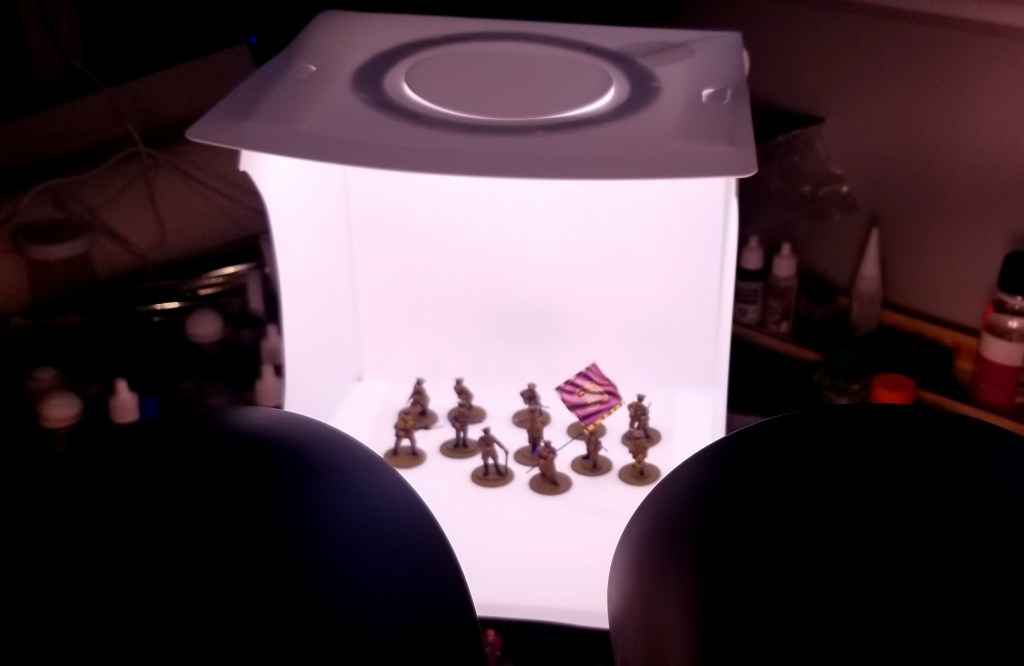
My VBCW collection as the end of March 2021. At that point I had 4 rifles squads primed, 2 civilian squads primed, and half of the command squad primed.

The Albertine’s have a purple flag as part of their theme so I wanted that to come across in their uniforms as well. Without further or do, I am happy to showcase the first painted squad of the Royal Canadian Volunteer regiment in service to his majesty Prince Albert Windsor.

The first completed squad! All that is left to do is a nice wash to seal everything in!

To help them stand out I have gone for purple puttees and purple cap badges. I have also added purple armbands as well for added visibility. The English uniform and purple go well together!

A closer look at Royal Canadian Volunteer uniform
The commanding officer and his flag bearer

I am very satisfied with how the first squad has turned out. I plan to add slight variations to the other squads to help them stand out in a unique way. 

Next week for my blog post I will dive into the lore of the Albertine’s and give you a preview of the history and back story I have created for the Canadian Volunteer regiment. I will also have more progress pictures as well.

Until next time!